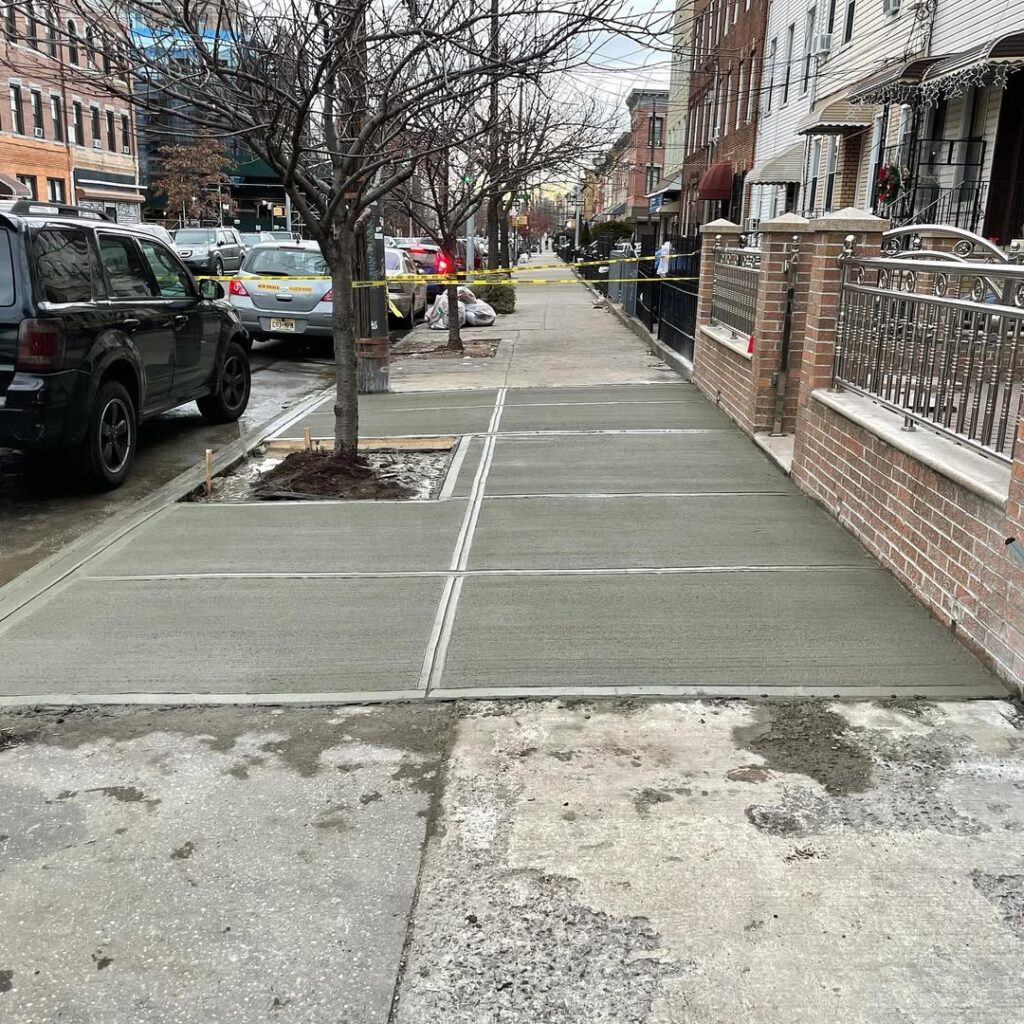
Looking in your mailbox and seeing a DOT Sidewalk Violation is like getting a surprise party invitation, except no one is having a good time. With the notice comes a time limit, and some required actions involving your sidewalk, or else penalties and fees will start being levied. Knowing what comes next and how timelines vary across the 5 boroughs can save you thousands of dollars and headaches. Here’s your complete roadmap from violation to resolution.
The First 75 Days: This is your critical window
Once the violation is issued, a 75-day time limit is initiated. This is the same for every borough, including Manhattan, Brooklyn, Queens, the Bronx, and Staten Island. Ignore it, and you get penalized.
You have 3 choices during these 75 days.
- Admit responsibility and get a licensed contractor to help resolve the issue.
- Request a hearing to dispute the violation.
- Do absolutely nothing (not recommended unless you enjoy financial pain)
Pretty much every homeowner realizes that the most effective course of action is to get a contractor for option 1, because disputing it will get them nowhere.
Getting Your Repair Estimate: The Price Tag Reality
This is also where borough variations might start to matter. A normal sidewalk repair job on Staten Island might run you $12-$18 for every square foot. However, in Manhattan, costs average $20-$30 per square foot due to higher labor costs, parking issues, and tighter working conditions.
Average violation repair costs by scope:
- Minor cracks (under 30 sq ft): $500-$1,200
- Moderate damage (30-100 sq ft): $1,200-$3,500
- Extensive replacement (100+ sq ft): $3,500-$8,000+
Brooklyn and Queens fall somewhere in the middle, typically ranging $15-$22 per square foot. The Bronx offers slightly lower rates, averaging $13-$19 per square foot. These aren’t just numbers—they’re your financial reality check.
The Permit Process: Borough-Specific Quirks
Your contractor needs a DOT work permit before touching that concrete. Processing times vary wildly by borough based on workload and local DOT office efficiency.
Manhattan typically processes permits within 2-3 weeks but can stretch to four during summer construction season. Brooklyn and Queens hover around 3-4 weeks, while the Bronx and Staten Island often approve permits faster—sometimes in just 10-14 days—because of lower application volumes.
Construction Timeline: Weather and Logistics
Once permits are approved, actual repair work takes 1-3 days for most residential properties. However, scheduling depends heavily on your borough’s unique challenges. Manhattan properties face strict working hours and parking nightmares. Brooklyn’s narrow streets create access issues. Queens’ sprawling layout means contractors juggle multiple jobs. The Bronx and Staten Island generally offer more flexibility.
Winter violations? You’re waiting until spring. Concrete doesn’t cure properly below 40°F, so November-through-March violations typically get extended timelines.
The Final Inspection and Sign-Off
After completion, the DOT inspects your work within 30 days. Pass, and you’re done. Fail, and your contractor fixes issues at their expense—if you hired a reputable one. This is why choosing experienced professionals matters enormously.
Stop Worrying, Start Fixing: Your Violation Solution
DOT violations don’t resolve themselves, and penalties multiply faster than you’d imagine. Whether you’re in busy Manhattan or quieter Staten Island, the timeline demands action. Zicklin Contracting specializes in navigating these exact situations across all five boroughs, handling everything from permits to final inspection.
Don’t let deadlines pass while you’re Googling solutions. Visit NYC Sidewalk Violations today for a free estimate and take the first step toward violation-free sidewalks. Your neighbors—and your wallet—will thank you.