
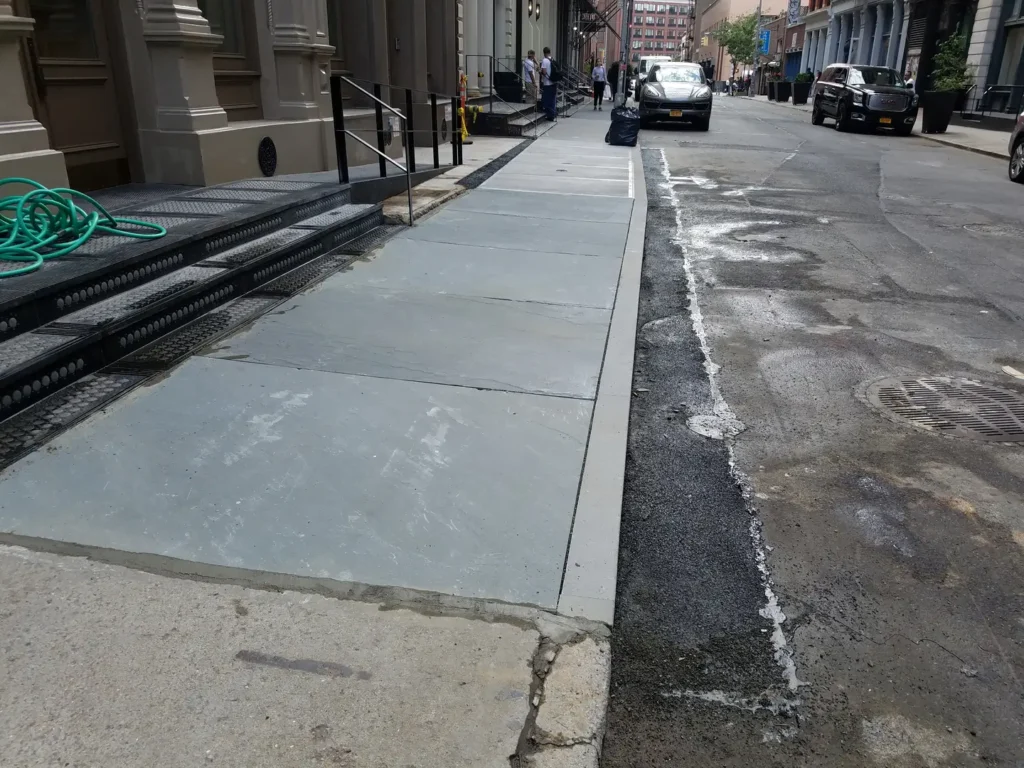
New York City has 12,750 miles of sidewalks, and those sidewalks see a ton of action. Between millions of footsteps and extreme weather, stubborn tree roots, and decades of urban wear, our sidewalks are taking a beating. Understanding what is happening under your feet can save you from violations, injuries and expensive repairs.
The Sidewalk Damage Hall of Fame
Let’s walk through what’s really wreaking havoc on NYC’s concrete canvas.
Cracks and Fractures
Those thin lines spider-webbing across the pavement aren’t just cosmetic—they’re safety hazards waiting to happen. Freeze-thaw cycles cause water to seep into openings, expand when frozen, and create cracks that grow each season. Summer heat makes concrete expand and contract, creating additional stress fractures.
But Mother Nature isn’t alone:
- Tree roots push upward, cracking concrete like an eggshell
- Heavy loads from trucks apply pressure sidewalks weren’t designed to handle
- Poor installation creates weak points that fail over time
Uneven Surfaces and Trip Hazards
Tree root uplift creates concrete mountains where flat surfaces once existed. Weather-related warping turns smooth pathways into obstacle courses. Rushed construction leaves behind settlements that become dangerous after years of use.
Potholes and Depressions
These cavities form through environmental assault and human activity. Freeze-thaw cycles create voids beneath the surface. Tree roots push sections upward, then sidewalks collapse when roots die. Heavy traffic gradually wears down concrete. Improper repairs create weak spots that eventually cave in, sometimes costing $1,500 or more to fix properly.
What’s Really Causing All This Chaos?
The Weather Warfare
NYC’s climate wages constant battle against sidewalks. Winter causes water to freeze and expand inside concrete. Summer heat makes concrete buckle. Excessive rainfall washes away supporting soil, causing sections to sink and crack.
Tree Roots: Nature’s Concrete Breakers
As street trees grow, roots expand underground searching for water and nutrients, forcing concrete to shift, crack, or lift entirely. Older neighborhoods with mature trees face more severe damage since root systems have had decades to develop.
The Daily Grind
Millions of pedestrians create constant abrasion that erodes concrete. Every footstep exerts pressure, and over time, this causes cracks and breakage. The rough, uneven surfaces increase trip-and-fall risks.
Construction and Road Salt
Construction equipment creates indentations and cracks. Road salt penetrates surfaces, reacting with concrete to accelerate disintegration. Deicing chemicals seep into structures causing extensive damage that costs $15-$18 per square foot for simple repairs.
Your Action Plan
As a property owner in NYC, you’re legally responsible for maintaining adjacent sidewalks. Ignoring damage leads to violation notices, lawsuits, and if you don’t fix issues within 75 days, the city may complete repairs and bill you at premium rates.
Assess damage thoroughly. Look for cracks, uneven surfaces, and dislodged concrete. Consult licensed contractors for evaluations and quotes. Don’t chase the lowest price—quality materials prevent future headaches. Schedule repairs promptly, obtain permits, and monitor progress.
Keep Your Sidewalks Safe
Sidewalk damage isn’t just about aesthetics—it’s about community safety, property values, and legal compliance. Address issues promptly to protect pedestrians and your wallet. Don’t let small problems become expensive violations. Visit NYC Sidewalk Violations to learn more about maintaining compliant, safe sidewalks and avoiding costly penalties.


