
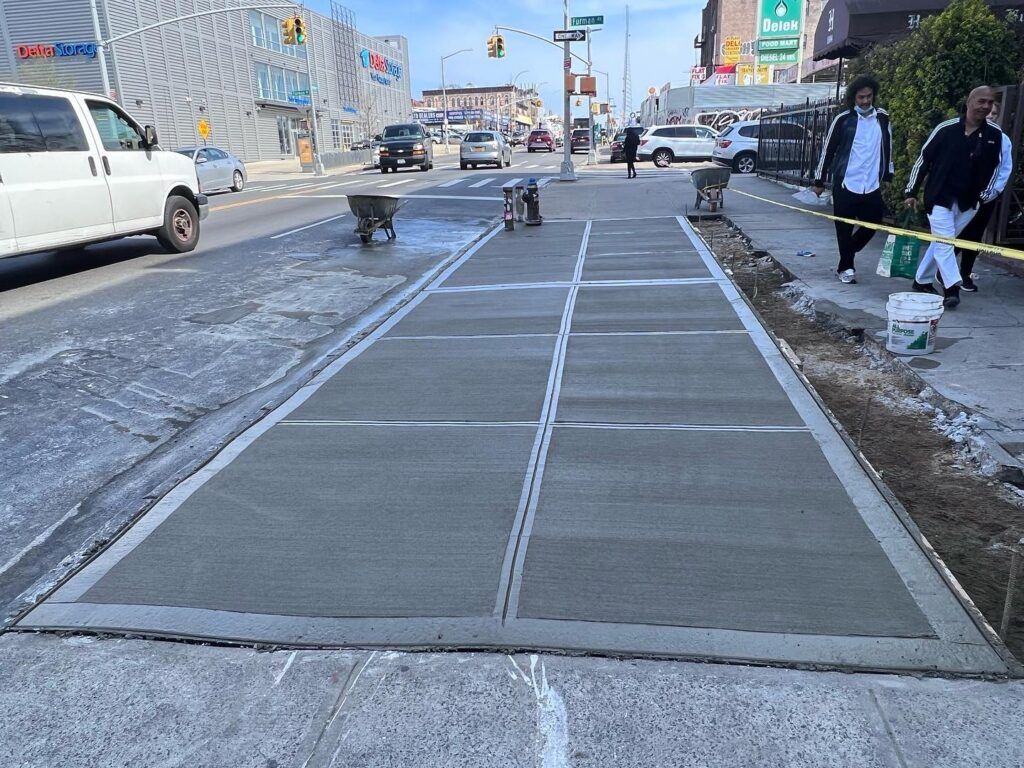
Sidewalk violations in New York City are not just annoying; they are safety priorities that can cost property owners thousands. Whether you are in charge of a brownstone in Park Slope, a commercial building in Astoria, or an apartment complex in the Upper West Side, knowing the DOT violation codes is necessary to keep you in the clear and avoid penalties. Let’s decode these citations with real-world examples.
Understanding NYC Sidewalk Violation Types
The New York City Department of Transportation issues violations depending on the defect categories. Every code corresponds to a different sidewalk hazard that poses risks to the public.
Code 1: Broken / Cracked Sidewalk
This is the most common of all violations that the city issues. Code 1 violations apply when sidewalk sections are wider than half an inch or when there are concrete slabs that are broken into pieces.
Real Example. A property owner in Williamsburg experienced a Code 1 violation. Tree roots on the sidewalk caused a 3-inch vertical displacement between sidewalk slabs, which created a large trip hazard for pedestrians near McCarren Park.
Code 2: Uneven Pavement
When there is vertical lippage between adjacent slabs of more than half an inch, that triggers this violation. This is common in older neighborhoods.
Queens Situation: A particular Forest Hills homeowner received Code 2 citations when the homeowner’s driveway apron settled unevenly and created a 2-inch drop that would catch wheelchair users off guard.
Code 3: Missing Sidewalk Sections
When concrete portions are entirely missing and expose dirt or create gaps, Code 3 infractions apply.
Manhattan Example: A building located on the Lower East Side of Manhattan received this violation when construction crews removed sidewalk panels but did not put them back within the required timeframe.
The Financial Impact
Ignoring sidewalk violations comes with serious consequences:
- Initial violation fines: $150–$300 per defect
- Follow-up penalties: Can escalate to $1,000+ if unresolved
- Liability costs: Unlimited if someone is injured on your defective sidewalk
- Property liens: DOT can place liens against non-compliant properties
Beyond fines, property owners face potential lawsuits if pedestrians trip and sustain injuries. One Brooklyn landlord paid $85,000 in a settlement after a delivery worker fractured their wrist on an unrepaired sidewalk crack.
Borough-Specific Challenges
Brooklyn: Aging infrastructure in neighborhoods like Sunset Park and Bensonhurst means higher violation rates. Tree root damage is particularly prevalent along tree-lined streets in Carroll Gardens.
Queens: Diverse property types—from single-family homes in Bayside to commercial strips in Jackson Heights—each face unique compliance issues. Heavy traffic areas see faster deterioration.
Manhattan: High pedestrian volume means violations get reported faster. Midtown and Financial District properties face scrutiny due to constant foot traffic and delivery activity.
Your 75-Day Compliance Window
Once you receive a violation notice, the clock starts ticking. You have 75 days to either:
- Hire a licensed contractor to complete repairs
- Contest the violation with photographic evidence
- Apply for a correction extension (rarely granted)
Missing this deadline triggers additional fines and potential legal action. The DOT doesn’t negotiate—they enforce.
Take Control of Your Sidewalk Compliance
Sidewalk violations won’t disappear on their own, and delays only increase your financial exposure. Zicklin Contracting specializes in resolving NYC DOT violations efficiently across all five boroughs. Our licensed team handles everything from initial assessment to DOT-approved repairs, ensuring your property meets code without the stress.
Don’t let a violation notice turn into a legal nightmare. Visit NYC Sidewalk Violations today for a free property evaluation and discover how we can resolve your violations before penalties escalate. With decades of experience navigating NYC regulations, we’ll protect your property and your peace of mind.


